Modernizing an Agent Portal
Outcome
I led UX strategy and experience design to modernize AmWINS Personal Lines’ fragmented agent portal, unifying workflows across products to reduce submission friction, improve data accuracy, and support future product expansion.
 |  |  |
|---|---|---|
 |  |  |
Delivered Capabilities + Early Outcomes
Delivered Capabilities
-
Standardized inconsistent submission flows across multiple products and carriers
-
Reduced known agent pain points during quote and bind
-
Improved consistency across mobile and desktop experiences
-
Introduced reusable components adopted by subsequent product teams
-
Accelerated onboarding for new lines of business
This work replaced fragmented legacy tools with a coherent, compliance-aware portal used by retail insurance agents across personal-lines products.
The Problem
This work transformed a mainframe-driven, paper-heavy workflow into a scalable digital experience balancing autonomy with compliance.
Business
AmWINS relied on fragmented agent tools that varied by product and carrier.
This created:
-
Increased submission errors
-
Longer quote and bind cycles
-
Inconsistent agent experiences
-
Limited scalability for new lines of business
-
Higher operational risk due to redundant data entry
Leadership needed a unified portal that could:
-
Standardize workflows
-
Preserve underwriting accuracy
-
Support mobile and desktop usage
-
Scale across products
-
Reduce rework caused by inconsistent flows
All while operating within regulatory constraints and legacy backend systems.
User
Retail agents were forced to:
-
Navigate different workflows for similar tasks
-
Re-enter the same data across products
-
Interpret unclear eligibility logic
-
Manage sensitive underwriting information without sufficient validation
This slowed submissions and increased the likelihood of costly corrections.
Agents needed speed, predictability, and confidence—not flexibility.
Evidence
Inputs included
-
Reviews of existing agent workflows
-
Stakeholder interviews with business and product leads
-
Underwriting requirements documentation
-
Analysis of common agent pain points and edge cases
Key Insights
-
Inconsistent flows increased cognitive load more than product complexity itself
-
Agents prioritize speed and predictability over customization
-
Progressive disclosure reduced errors without slowing experienced users
-
Most submission issues originated from unclear product selection and data entry
These insights directly informed the interaction model and system architecture.
Iteration + System Thinking
Requirements Gathering


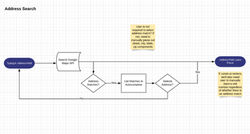
User flows
 |  |
|---|
Look and Feel
 |  |  |
|---|---|---|
 |  |  |
Components
 |  |  |
|---|
Design Strategy + Decisions
The core challenge was creating a single mental model that worked across:
-
Multiple insurance products
-
Desktop and mobile environments
-
Varying agent experience levels
-
Strict underwriting rules
-
Legacy backend dependencies
I focused on:
-
Translating ambiguous business rules into usable flows
-
Standardizing interaction patterns without breaking product-specific logic
-
Designing reusable components engineering could realistically support
-
Balancing MVP delivery with long-term scalability
Final Reflection
This project reinforced that in regulated fintech:
Good UX reduces operational risk as much as it improves usability.
-
Standardization enables scale.
-
Predictability builds trust.
-
Systems thinking beats screen-level optimization.
